
The #1 cookie banner for GDPR-compliant websites
Turn legal requirements into a marketing advantage. Our cookie banner helps you collect valid user consent, stay compliant with global privacy laws, and preserve your website performance.
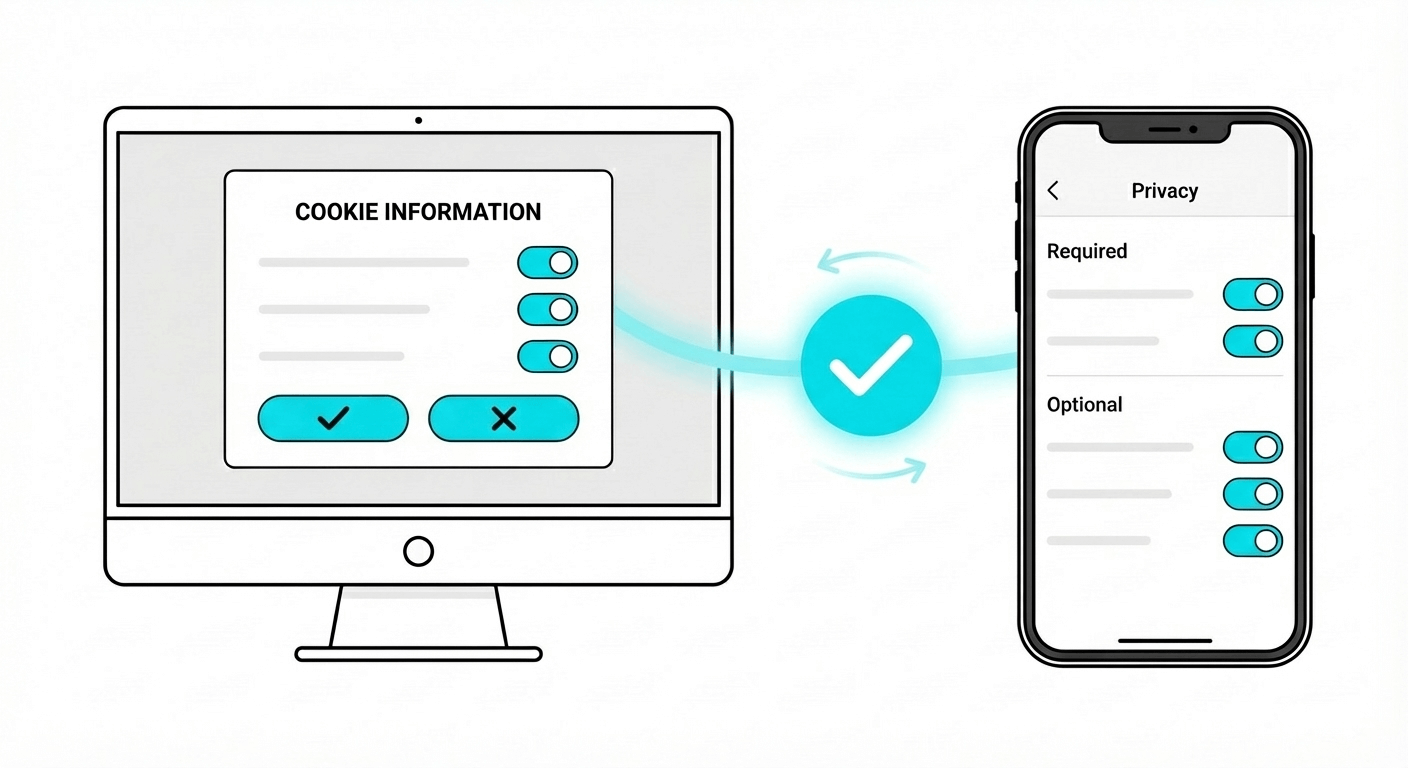
Why you need a cookie banner in 2026
Stay compliant with GDPR, ePrivacy, and global privacy laws
Our cookie banner ensures you meet legal obligations – automatically.
Get back the data most banners block
Recover up to 40% of lost data from cookie-declining visitors with anonymous tracking.
Attribute revenue with confidence
Connect 98% of traffic to the right sources for smarter marketing spend.
Set up a cookie banner in 3 minutes
No developer needed.
Just sign up, scan your website, choose your banner, and paste the script into your site.
- Pre-built WCAG-certified templates
- CMS plugins for WordPress, Shopify, Drupal
- No code required

What makes our cookie banner better?
- Easy to customize to match your brand
- Multilingual support (44+ languages)
- WCAG 2.2 accessibility compliant
- Consent storage for audit readiness
- Daily scanning to catch new cookies
Built for your stack
- Google Tag Manager
- Consent Mode v2 (Google & Microsoft)
- Piwik PRO analytics integration
- Shopify, WordPress, Drupal

Optimize for compliance and conversions
Compliant & Transparent
- GDPR, ePrivacy, CCPA
- Equal accept/reject
- Avoid dark patterns
High Performance
- Google Consent Mode v2
- Boost consent rates
- A/B test banner variants
Ready to launch your compliant cookie banner?
No credit card. No setup hassle. Just legally valid consent, from day one.
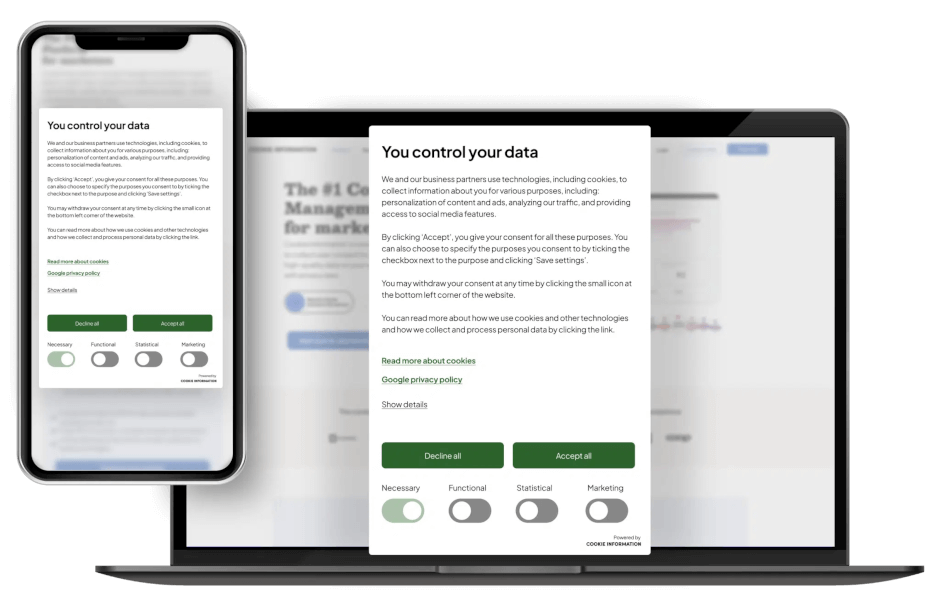
Start a 14-day free trial
Frequently Asked Questions
What is a cookie banner?
Cookie consent is a core requirement of modern data privacy laws such as the General Data Protection Regulation (GDPR). Before any non-essential cookies are placed on a user’s device, websites must collect valid consent.
The most effective way to do this is with a cookie banner. A cookie banner informs visitors about how cookies are used on the website and gives them a clear, compliant choice to accept or reject cookies before tracking begins.
A compliant cookie banner should always include:
- Clear information about cookies: A short, easy-to-understand explanation of which cookies are used on the website.
- Purpose-based transparency: Details about why cookies are set, such as analytics, marketing, or personalization.
- How cookies are used: Information about how collected data is processed and shared.
- Accept and reject options: An equally visible option to accept or reject cookies directly in the cookie banner.
- Ongoing consent control: A simple way for users to change or withdraw their consent at any time.
A well-designed cookie banner ensures compliance, builds user trust, and gives visitors full control over their privacy choices.
Do I need cookie banner under GDPR?
Yes, in most cases you need a cookie banner under GDPR.
If your website uses cookies or similar technologies for analytics, marketing, personalization, or tracking, and serves visitors from regions with privacy regulations like GDPR (EU), CCPA (California), or similar laws, they require you to collect valid user consent before those cookies are set. The standard way to do this is with a cookie banner.
Under GDPR, a cookie banner is required when:
- You use non-essential cookies (e.g. Google Analytics, marketing pixels, A/B testing tools)
- You target or receive visitors from the EU/EEA
- You process personal data through cookies or other online trackers
Cookies that are strictly necessary for the website to function (such as login or shopping cart cookies) do not require consent, but they must still be clearly explained.
To be GDPR-compliant, your cookie banner must:
- Inform users about what cookies are used and for what purpose
- Allow users to accept and reject cookies with equal ease
- Block non-essential cookies until consent is given
- Let users change or withdraw consent at any time
- Avoid pre-checked boxes or dark patterns
In short: if your website uses anything beyond strictly necessary cookies, a cookie banner is not optional under GDPR and most data privacy laws – it’s a legal requirement.
How do I know if my current banner is privacy-compliant?
You can assess your cookie banner’s compliance by checking whether it meets the core GDPR and ePrivacy requirements.
Your cookie banner is likely compliant if it:
- Blocks all non-essential cookies until the user gives consent
- Clearly explains what cookies are used and for what purposes
- Offers an equal choice to accept or reject cookies in the first layer
- Does not use pre-checked boxes, nudging, or dark patterns
- Allows users to change or withdraw consent at any time
- Stores and documents consent for audit purposes
If cookies are set before consent, if rejecting cookies is harder than accepting them, or if users can’t easily revisit their choices, your banner is not compliant.
A practical way to be sure is to run a cookie scan or compliance check to see which cookies fire before consent.
What’s the difference between a cookie banner and a privacy notice?
A cookie banner and a privacy notice serve different purposes, and most websites need both.
- A cookie banner is shown when a user first visits a website. It collects consent and lets users accept or reject cookies before tracking starts.
- A privacy notice (or privacy policy) is a permanent document that explains how personal data is processed across the website or business, including legal bases, user rights, and data sharing.
In short:
- The cookie banner is about real-time consent and choice
- The privacy notice is about detailed legal transparency
A cookie banner does not replace a privacy notice, and a privacy notice alone is not enough to meet GDPR cookie consent requirements.